
Pond Construction Excavation in Laramie, Wyoming
Pond construction in Laramie, WY involves detailed excavation work designed to create stable, long-lasting water retention areas for agricultural use, livestock, drainage control, and private land enhancement. Harvey Dirtworks provides pond construction services throughout Laramie and within a 100-mile service area, focusing on excavation methods suited to Wyoming’s varied terrain and soil conditions.
Constructing a pond requires more than simply digging a hole in the ground. The process involves evaluating soil composition, water retention capability, natural drainage flow, and elevation patterns. In Wyoming, where conditions can shift between rocky subsoil, compact clay, and loose sandy layers, excavation must be carefully controlled to ensure the pond holds water effectively and maintains structural integrity over time.
Harvey Dirtworks
performs pond excavation with attention to depth consistency, slope shaping, and embankment stability to support long-term water retention and functional use.
Site Evaluation and Pond Layout Planning
Proper pond construction begins with a detailed evaluation of the proposed site. In Laramie, WY, terrain conditions can vary significantly even within short distances, making planning an essential part of the excavation process.
Land Assessment and Water Flow Analysis
The natural flow of water across the property is evaluated to determine the most suitable pond location. Areas with natural drainage channels or low points are often selected to minimize excavation requirements and improve water collection efficiency.
Slope direction and elevation changes are also analyzed to ensure that the pond will naturally collect runoff without excessive engineering modifications.
Soil Composition Testing for Water Retention
Soil type plays a major role in pond performance. Clay-heavy soils are typically more suitable for water retention, while sandy or rocky soils may require additional sealing or compaction. Excavation planning accounts for these conditions to determine whether the pond will naturally hold water or require soil modification.
Excavation Layout Marking and Depth Planning
Once the site is selected, the pond area is marked according to the intended size and depth. Depth planning is especially important in Wyoming, where evaporation rates and seasonal water variation can affect pond levels. Excavation depth is designed to balance water storage needs with structural stability.
Pond Excavation and Earth Removal
Excavation is the central phase of pond construction and involves removing large volumes of soil while shaping the basin to the required design.
Basin Digging and Shape Formation
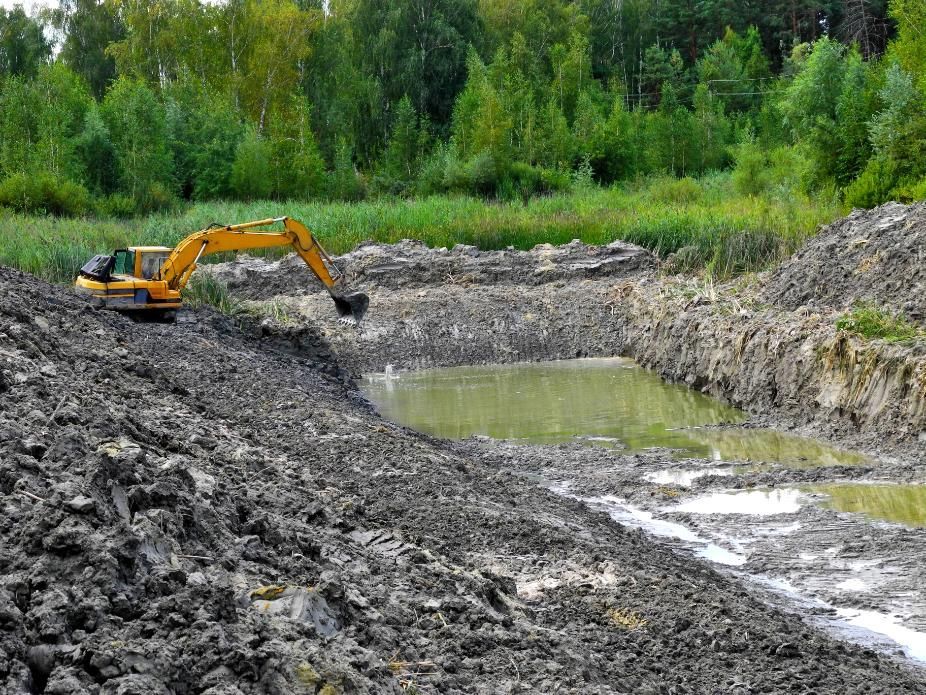
The pond basin is excavated using heavy equipment to create the desired shape and depth. Excavation is performed in layers to maintain control over slope angles and prevent uneven settling.
The shape of the pond is typically designed with gradual slopes rather than steep walls to improve stability and reduce erosion risk along the shoreline.
Soil Removal and Material Redistribution
Excavated soil is either relocated on-site for embankment construction or transported to designated areas depending on project requirements. In many pond construction projects, removed soil is used to build surrounding berms that help retain water within the basin.
Depth Control and Water Capacity Design
Maintaining consistent depth is essential for ensuring that the pond holds an adequate volume of water. Excavation is carefully measured throughout the process to match design specifications and prevent shallow or uneven areas that could affect water distribution.
Embankment Construction and Pond Shaping
Once the main excavation is complete, additional shaping is performed to stabilize the pond edges and improve water retention performance.
Berm and Bank Formation
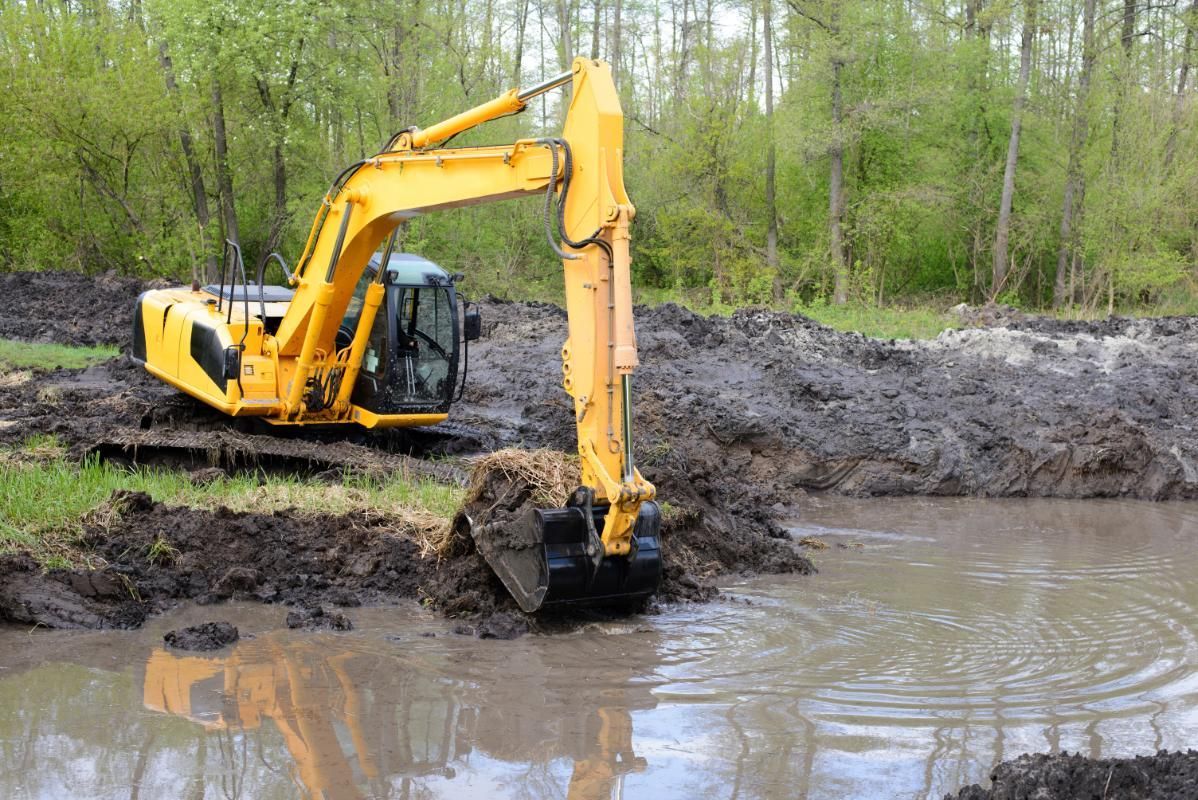
Soil is compacted and shaped around the perimeter of the pond to form embankments. These structures help contain water within the basin and reduce the risk of overflow during heavy rainfall or snowmelt.
Proper compaction is essential to prevent erosion and maintain the structural integrity of the pond edges over time.
Shoreline Slope Adjustment
The shoreline is graded to create gradual slopes that reduce erosion caused by wind, water movement, and seasonal changes. Steep edges are avoided to improve stability and make the pond more resistant to collapse or washout.
Erosion Control Shaping
In areas with higher water flow or wind exposure, additional shaping is performed to reduce erosion risk. This may include reinforcing specific sections of the shoreline with compacted soil or adjusting slope angles for better water dispersion.
Stock Ponds and Agricultural Water Systems
Pond construction in Laramie, WY is commonly used for agricultural purposes, especially for livestock water supply and land management.
Livestock Watering Ponds
Stock ponds provide a reliable water source for cattle and other livestock in rural areas. Excavation is designed to ensure consistent water depth and accessibility while minimizing contamination from surrounding soil runoff.
Irrigation and Farm Water Storage
Farm operations often rely on ponds for irrigation support and seasonal water storage. Excavation ensures that these ponds can hold sufficient water volume during dry periods while maintaining structural stability during heavy use.
Runoff Collection and Land Management
Ponds are also used to capture and manage surface runoff, reducing erosion and improving water distribution across agricultural land. Proper excavation ensures that runoff is directed efficiently into the pond without damaging surrounding terrain.
Retention and Drainage Pond Construction
In addition to agricultural use, pond excavation is often used for water management and drainage control on residential and commercial properties.
Stormwater Retention Ponds
Retention ponds are designed to collect and temporarily hold stormwater runoff. Excavation ensures that these ponds are shaped to manage water flow and prevent flooding in surrounding areas.
Drainage Control Excavation
Pond construction can also be used to redirect excess water away from structures and low-lying areas. Excavation is designed to create controlled water pathways that reduce erosion and soil saturation.
Overflow Design and Water Level Management
Proper grading ensures that excess water can safely overflow without damaging surrounding land. Excavation includes shaping spillways or overflow zones to maintain controlled drainage during heavy precipitation events.
Soil Conditions and Environmental Factors in Laramie, WY
Pond construction in Laramie, WY is commonly used for agricultural purposes, especially for livestock water supply and land management.
Clay, Rock, and Mixed Soil Excavation
Some areas around Laramie contain clay soils that naturally retain water, while others consist of rocky or mixed soil that may require additional compaction or sealing. Excavation techniques are adjusted based on these conditions to ensure water retention efficiency.
Seasonal Freeze and Thaw Impact
Freeze-thaw cycles can affect pond edges and embankments over time. Excavation and shaping methods account for seasonal movement to reduce cracking, erosion, and structural shifting.
Wind and Evaporation Considerations
Wyoming’s wind conditions and dry climate can increase evaporation rates. Pond depth and surface area are designed during excavation to help maintain stable water levels throughout seasonal changes.
Service Area for Pond Construction in Wyoming
Harvey Dirtworks provides pond construction services in Laramie, WY and extends up to 100 miles into surrounding rural and agricultural regions. This includes properties with varied terrain such as flat plains, rolling hills, and rocky high-elevation land.
Each pond construction project is tailored to site conditions, soil composition, and intended use. Excavation is adjusted to ensure proper water retention, structural stability, and long-term performance in Wyoming’s environmental conditions.
Pond construction requires precise excavation, careful shaping, and proper embankment design to create functional water systems that serve agricultural, drainage, and property enhancement needs throughout the region.